Check the settings
Look for an accidentally changed temperature setting or a cooling-off mode. Controls differ between models, so avoid guessing button combinations or repeatedly resetting the appliance.

Domestic fridge cooling faults · Cape Town
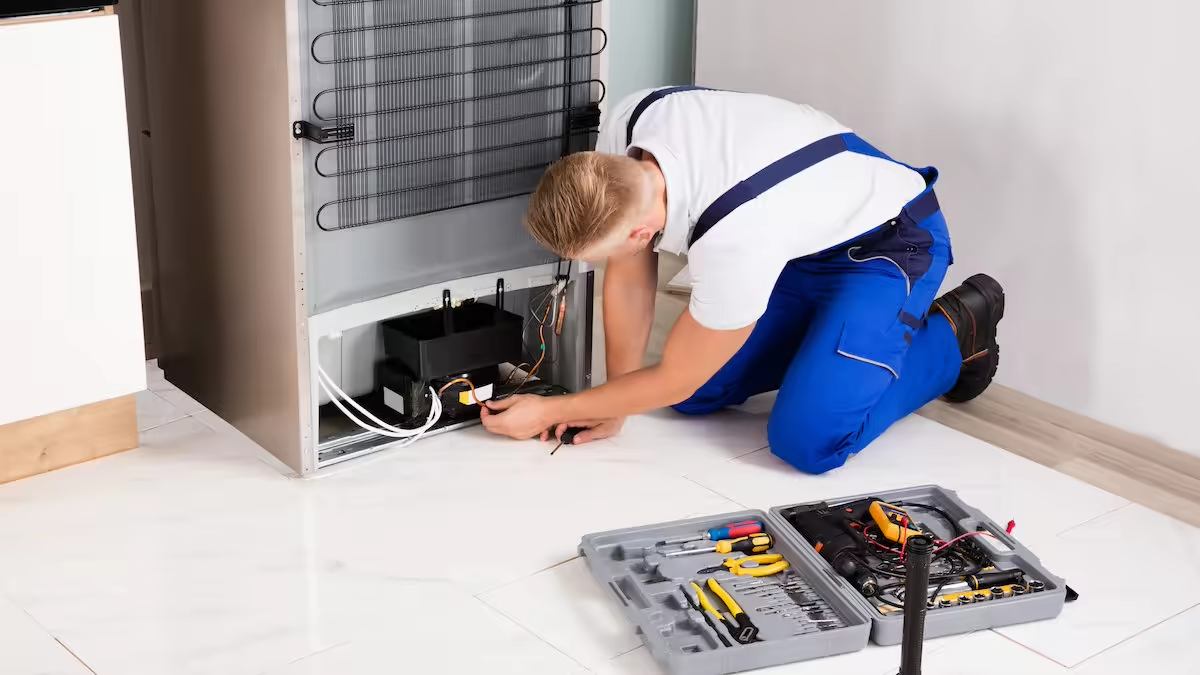
A warm fridge needs the right diagnosis. Cape Refrigeration assesses domestic fridges and fridge-freezers to find out why cooling has dropped and what the repair involves.
Tell us whether the freezer is still cold, when the problem started and your suburb. We’ll help arrange an assessment, with the work and costs explained before you approve a repair.
Monday–Saturday · 06:30–18:00
Ask about the earliest appointment. Attendance and repair times depend on availability, diagnosis and parts.
Start with what you notice
The difference between one warm compartment and a complete cooling loss helps us plan the assessment. Select the closest description below.
Poor cooling can result from blocked airflow, a door that does not seal, a defrost fault, a fan or temperature-control problem, or a sealed-system fault. The symptom alone does not confirm that the fridge needs gas or a compressor.
On models that share cold air between compartments, restricted vents, ice build-up, a fan problem or a damper fault can limit cooling in the fridge. Other designs use separate cooling circuits, so the model matters. Tell us if you can see frost or hear a new scraping sound.
For a fuller explanation, read our guide to a cold freezer and warm fridge.
Get help with this symptom ↗Start by noting whether the appliance has power and whether cooling is enabled in its settings. If both compartments remain warm, the assessment may need to cover controls, compressor operation, heat removal and the refrigerant circuit. A display or interior light does not confirm that the cooling system is working.
Request a cooling assessment ↗Long running can reflect a warm room, a door leak or a recent large food load. It can also accompany airflow, control or sealed-system faults. Note the actual compartment temperature if you have an appliance thermometer; a humming sound alone cannot identify the failed component.
Tell us about the cooling loss ↗Record when power returned and any error message before changing settings. Some models delay restarting or need time to recover; follow the model’s manual. If cooling does not resume, arrange an assessment. Timing alone does not prove that a surge damaged the control board or compressor.
Ask about an assessment ↗Before the technician arrives
Follow your appliance manual. These observations can help with booking; they do not replace fault diagnosis.
Look for an accidentally changed temperature setting or a cooling-off mode. Controls differ between models, so avoid guessing button combinations or repeatedly resetting the appliance.
Move food packages away from visible air openings and check that drawers and shelves are correctly seated. Leave the ventilation clearances specified in the installation manual.
Check for trapped packaging, visible gaps or a drawer preventing closure. Gently clean accessible seals according to the manual. A torn or distorted seal needs assessment.
Photograph the model plate and any error code. Note when cooling changed, whether the freezer is affected and whether ice, noise or water appeared at the same time.
Keep door openings brief and move perishable food to reliable cold storage. Never taste food to check safety. See food-safety guidance for lost refrigeration.
From symptom to cause
The checks depend on your fridge’s design and the symptoms. A useful assessment connects the test findings to the recommended repair.
A fridge needs to move air inside and release heat outside. Restricted vents, a non-operating fan or poor ventilation can reduce cooling. The technician checks the relevant airflow path and fan operation for the model instead of assuming every warm fridge has the same fault.
On frost-free models, ice around the evaporator can restrict air movement. Depending on the design, checks may include the heater, sensors, defrost controls and fan clearance. Cooling that returns after a defrost can be a clue; it does not establish that the underlying fault has been repaired.
Sensors, thermostats, wiring, starting components and electronic controls influence when the system runs. Testing helps distinguish a control problem from a fault in the component it operates. Share error codes and recent changes, but avoid ordering a board or motor from symptoms alone.
If testing points to the refrigerant circuit, the repair options depend on the fault and whether it is accessible. Read about fridge leak checks and regassing or compressor replacement assessments. Neither service should be selected solely because a fridge feels warm.
A clear next step
Send your suburb, fridge brand, model if available and symptoms. Ask us to confirm the assessment charge and earliest appointment before the visit.
The technician investigates the relevant cooling, airflow, electrical or control systems. Some faults need further testing or parts identification before a complete quotation is possible.
We explain the findings, proposed work and costs for your approval. Where a repair proceeds, cooling and operation are checked; recovery time depends on the appliance and conditions.
Understand the options
There is no reliable single price for a fridge that is not cooling. A door-seal or fan repair involves different work from a control-board or sealed-system repair. The model, confirmed fault, required parts and access all affect the quotation.
Ask about the assessment or call-out charge when booking, and whether it is separate from the repair. Approve the quoted scope before work begins. Our fridge repair cost guide explains how to compare quotations.
Model-specific support
Choose your brand for its repair-service page. Share the model number when enquiring: controls, cooling layouts and parts differ even within the same brand.
Independent repair support. Assessment, model and parts availability apply. For an appliance under manufacturer warranty, check its warranty route before arranging independent repairs.
Cape Town and surrounding suburbs
We arrange domestic cooling-fault assessments across Cape Town. Explore local service information below, or send your suburb so we can confirm coverage and appointment availability.
For other domestic faults, see our Cape Town fridge repair services. Business equipment is covered through our commercial refrigeration service.
Questions before booking
These answers explain what symptoms can tell you and what still needs testing. Have a model number or error code? Include it with your enquiry.
No. Fan, airflow, defrost and control faults can also reduce cooling. Refrigerant work is appropriate only when assessment supports a sealed-system repair. A leak or other underlying fault needs consideration before a recharge is recommended.
Yes. The light or display can operate while cooling is disabled or while another fault prevents the system from running. That is why visible power does not rule out a control, starting-component or compressor problem.
A model-specific reset may clear a temporary control condition, and a full defrost may temporarily improve restricted airflow. Neither confirms a lasting repair. Record any error code first and follow the manual rather than repeatedly switching power on and off.
Many faults are repairable, but the answer depends on the diagnosis, appliance condition and available parts. An inaccessible refrigerant leak or several major faults may change the recommendation. We assess the unit before confirming a repair.
Call or send your suburb to ask about the earliest available appointment. Attendance depends on scheduling and coverage. Completing a repair on the visit also depends on the confirmed fault, testing and suitable parts.
Recovery varies with the model, room temperature, food load, door openings and work completed. Ask the technician what to expect and how to check progress. Do not return perishable food until reliable refrigeration has been restored.
Let’s find the next step
Send the useful details once. We’ll help confirm coverage, assessment arrangements and availability.
060 859 3290 ↗Monday–Saturday · 06:30–18:00
info@caperefrigeration.co.za
Appointment requests are confirmed by our team.
Prepare your enquiry, then review and send it in WhatsApp.